GMP Guidelines in the US, UK and Canada: What You Need to Know
June 8, 2026
Introduction
Pharmaceutical manufacturing operates under some of the most rigorous standards in any industry. Whether a facility is producing active pharmaceutical ingredients (APIs), finished dosage forms, or packaging finished drugs, every step must meet defined quality benchmarks. Good Manufacturing Practice (GMP) guidelines exist to ensure exactly that every medicine reaching a patient has been made consistently, safely, and to the required quality.
For companies operating across multiple markets, understanding how GMP requirements differ between the US, UK, and Canada is not optional. It is fundamental to market access.
What is Pharmaceutical Manufacturing and Why Does GMP Matter?
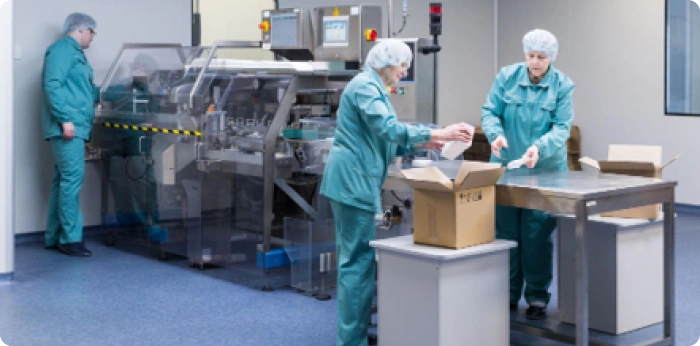
Pharma manufacturing is the process of taking a drug compound from laboratory-scale synthesis to a commercially available, patient-ready medicine. This includes everything from sourcing raw materials to API production, formulation development, filling, and packaging.
GMP, or Good Manufacturing Practice, is the system of regulations and guidelines that governs how these processes must be designed, controlled, and documented. It covers people, premises, equipment, documentation, production, quality control, outsourcing, complaints, and product recalls.
The case for GMP is straightforward. Without it, there is no reliable mechanism to ensure that a batch of tablets manufactured in January meets the same standards as one manufactured in October. GMP creates the conditions for consistency. It is the backbone of quality assurance for customers, regulators, and ultimately patients.
The Step-by-Step Pharma Manufacturing Process
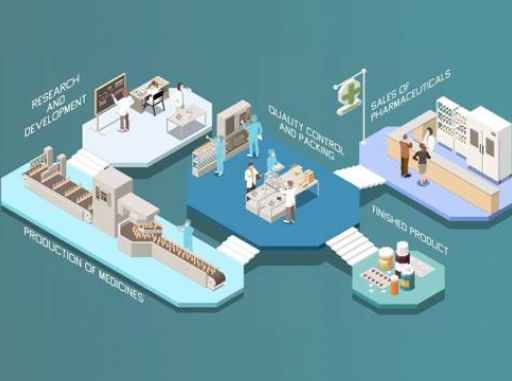
Understanding GMP is easier when mapped against how pharmaceutical manufacturing works. Here is a simplified view of the core stages:
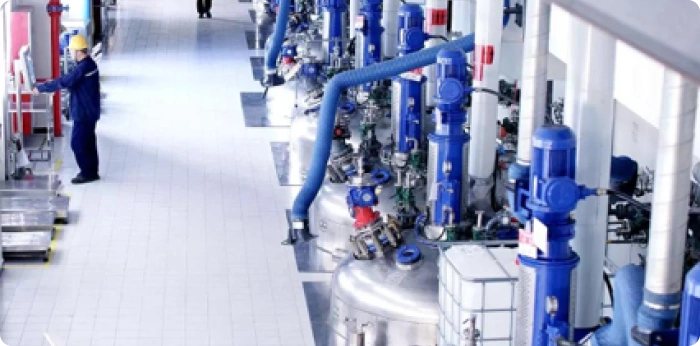
1. API Production
API production begins with chemical synthesis or biological extraction, depending on whether the drug is small-molecule or biologic in nature. At this stage, raw materials must be qualified, reaction conditions controlled, and intermediates tested. GMP requirements here focus heavily on contamination control, in-process testing, and batch documentation.
2. Formulation Development
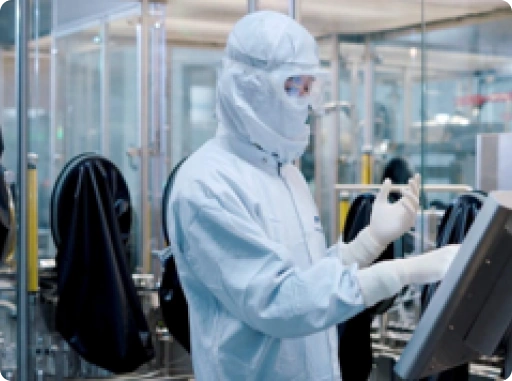
Once the API is produced, it is combined with excipients to create the dosage form, whether that is a tablet, capsule, injectable, or topical. Formulation involves precise mixing, granulation, coating, or fill-finish operations. GMP governs equipment calibration, environmental monitoring, and validation of each unit operation.
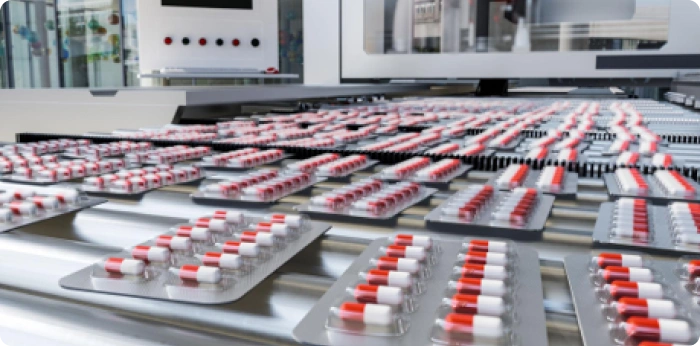
3. Packaging
Packaging is not simply a commercial decision. It is a critical quality step. Incorrect labelling, contamination during packing, or use of unapproved packaging materials can render an otherwise compliant product non-conforming. GMP requires line clearance procedures, reconciliation of printed packaging materials, and documented operator training.
Regional GMP Compliance: US FDA, UK MHRA, and Health Canada
The three major regulators for pharma manufacturing in North America and the UK share the same underlying principle: protect the patient. But each has its own framework, inspection process, and expectations.
United States: US FDA (21 CFR Parts 210 and 211)
The US Food and Drug Administration enforce Current Good Manufacturing Practice (cGMP) through Title 21 of the Code of Federal Regulations. The word "current" is intentional. It signals that compliance is not static; manufacturers are expected to adopt evolving best practices, not simply meet minimum standards.
Key FDA expectations include:
- Written procedures for all manufacturing and testing operations
- Validated manufacturing processes with documented evidence
- A fully functional quality unit independent of production
- Investigation of all failures, out-of-specification results, and complaints
- Annual product reviews
The FDA conducts both domestic and foreign inspections. Non-compliance can result in warning letters, import alerts, or consent decrees.
United Kingdom: MHRA (UK GMP Guidelines)
Post-Brexit, the UK Medicines and Healthcare products Regulatory Agency (MHRA) operates its own GMP framework. While it remains largely aligned with EU GMP guidelines (particularly EudraLex Volume 4), the MHRA now issues its own manufacturer licenses and conducts independent inspections.
Facilities supplying the UK market must hold a valid MHRA Manufacturer's Licence. Key focus areas under UK GMP include:
- Qualified Person (QP) oversight for batch certification
- Strict pharmaceutical quality system requirements
- GDP (Good Distribution Practice) alignment for supply chain controls
- Risk-based approach to validation and change control
The MHRA has signaled its intent to develop its own guidelines over time, diverging where it sees scientific or regulatory rationale to do so.
Canada: Health Canada (Division 2, Food and Drug Regulations)
Health Canada's GMP requirements are set out under Division 2 of the Food and Drug Regulations and further detailed in guidance documents such as the GUI-0001 (Good Manufacturing Practices Guidelines). Canada is also a member of the Pharmaceutical Inspection Co-operation Scheme (PIC/S), meaning its standards are internationally benchmarked.
Compliance expectations in Canada include:
- Site licences for manufacturers and importers
- Designated personnel with defined GMP responsibilities
- Environmental monitoring programmes for sterile and non-sterile manufacturing
- Stability testing to support shelf-life claims
Health Canada conducts risk-based inspections and can refuse site licences or issue non-compliance notices to facilities found deficient.
The Role of AI in Pharma Manufacturing
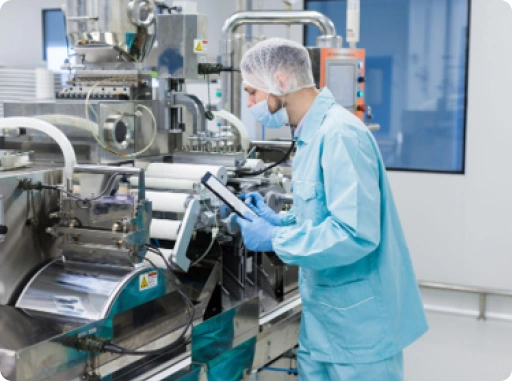
The pharmaceutical industry is in the middle of a significant operational shift. Artificial intelligence and machine learning are moving from pilot projects into mainstream manufacturing applications. This is changing what quality assurance looks like in practice.
In pharma manufacturing today, AI is being applied across several areas:
- Predictive quality control: Machine learning models analyse in-process data in real time to flag deviations before they result in batch failures.
- Process analytical technology (PAT): AI-powered sensors monitor critical quality attributes during production, enabling real-time release testing in certain scenarios.
- Supply chain visibility: AI tools improve demand forecasting, raw material traceability, and inventory optimisation across global networks.
- Documentation and compliance: Natural language processing is being used to review batch records and flag anomalies that manual review might miss.
Regulators are keeping pace. The FDA has published a discussion paper on AI in drug manufacturing, and the ICH is developing guidance on AI across the pharmaceutical product lifecycle. The direction is clear: AI is not a future technology in this sector. It is already here.

Smart Factories and the Future of Pharmaceutical Manufacturing
Smart factory concepts are redefining what efficient, compliant pharmaceutical manufacturing looks like. A smart factory integrates automation, data connectivity, and advanced analytics to create a manufacturing environment where data flows continuously and decisions are made faster and with more evidence behind them.
For the pharmaceutical industry, this matters for several reasons. Continuous manufacturing, for instance, replaces traditional batch processing with an uninterrupted production flow, reducing cycle times and improving consistency. Digital twins allow manufacturers to model process changes virtually before implementing them on the shop floor. Automated visual inspection systems reduce reliance on manual inspection and improve defect detection rates.
These are not innovations for large multinationals alone. Scalable manufacturing solutions are increasingly available in modular formats, allowing pharma developers at various stages to access smart manufacturing capabilities without requiring full greenfield investment.
Pharma Development and Scalable Manufacturing
One of the more underappreciated aspects of pharmaceutical development is the challenge of scaling. A process that works at 1 kg in a lab does not automatically translate to 500 kg in a GMP facility. Bridging that gap requires structured technology transfer, process characterisation, and scale-up studies aligned to GMP requirements.
Drug discovery services and pharma development partners play a critical role here. The right manufacturing partner offers not just capacity, but the scientific and regulatory expertise to move a molecule through development stages without losing time to avoidable failures.
For companies engaged in innovative medicines development, finding a partner with integrated capabilities across API synthesis, formulation, and regulatory submission is increasingly a competitive differentiator.
Conclusion
GMP compliance in the US, UK, and Canada is not a static checkbox. It is a continuous commitment to process integrity, documentation rigour, and quality culture. As the pharmaceutical industry moves toward smarter, more connected manufacturing, the underlying GMP principles remain constant: control your processes, understand your products, and protect the patient.
For organizations navigating multi-market compliance or scaling their manufacturing operations, staying current with regional regulatory expectations is as important as the science itself.
Frequently Asked Questions (FAQ’s)
1. What is GMP and why is it important in pharmaceutical manufacturing?
GMP (Good Manufacturing Practice) is a set of regulations ensuring medicines are consistently produced and controlled to quality standards, safeguarding patient safety and product reliability.
2. What are the key stages in pharmaceutical manufacturing under GMP?
The process includes API production, formulation development, and packaging, each governed by strict controls on quality, documentation, and contamination prevention.
3. How do GMP regulations differ across the US, UK, and Canada?
While all focus on patient safety, the US FDA emphasises evolving “current” practices, the UK MHRA focuses on QP oversight and licensing, and Health Canada follows a risk-based inspection and licensing approach aligned with global standards.
4. What happens if a company fails to comply with GMP standards?
Non-compliance can lead to warning letters, import restrictions, licence refusals, or regulatory action, impacting market access and business continuity.
5. How is AI transforming pharmaceutical manufacturing?
AI is enabling predictive quality control, real-time monitoring, improved supply chain visibility, and automated documentation review, enhancing efficiency and compliance.
6. What challenges arise when scaling pharmaceutical manufacturing?
Scaling from lab to commercial production requires careful technology transfer, process validation, and GMP alignment to avoid quality issues and delays.


Latest Blogs

15.10.2026
Innovation Beyond the Laboratory
Pharma R&D innovation does not stop at the laboratory. It also shapes how medicines are developed, manufactured, supplied and made accessible to patients
Read More: Innovation Beyond the Laboratory
12.10.2026
Innovation a Key Enabler in Pharmaceuticals
Innovation matters in pharmaceuticals because it makes pharmaceutical development more efficient, informed and scalable.
Read More: Innovation a Key Enabler in Pharmaceuticals
25.09.2026
Future Outlook of Consumer Healthcare in India
India’s healthcare story is being rewritten - from a predominantly treatment-oriented model towards one that places greater emphasis on prevention
Read More: Future Outlook of Consumer Healthcare in India